

Editor’s Note: The below piece is the sole opinion of its author, and does not necessarily reflect the views or opinions of Y’all Weekly or its publisher.
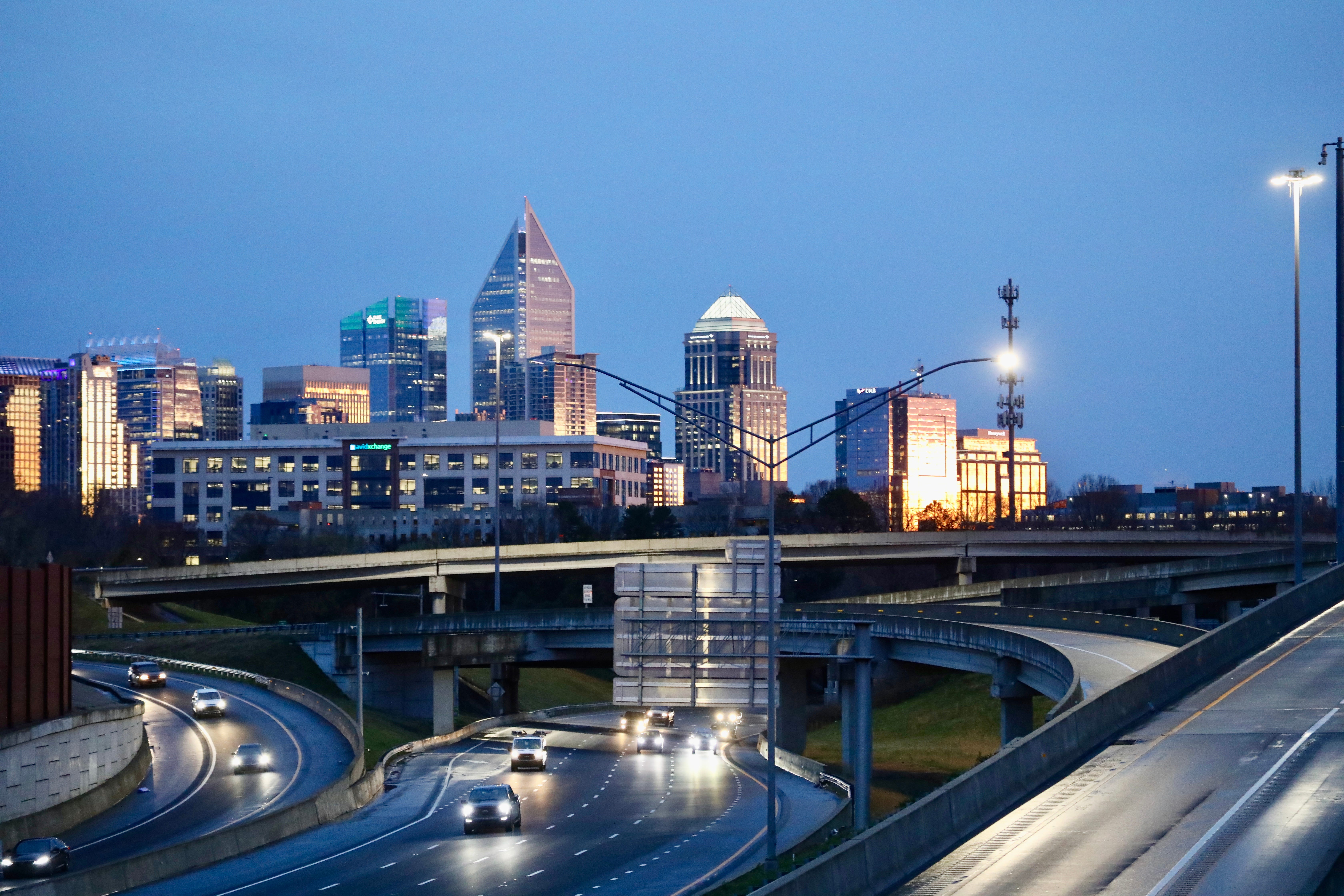
In the face of financial and political pressure from state government, Charlotte City Council is reconsidering their approach to the Interstate 77 toll lanes project with a vote scheduled for next week.
The clock is ticking as Vickie Sawyer, Republican state senator representing part of Mecklenburg County, passed legislation to financially punish municipalities that remain opposed to the plan.
With a price tag over $4 billion, the city owes it to taxpayers to get it right. It is a generational decision that will affect the community for decades.
With that in mind, the city council should consider the project on its merits before making a decision under duress. Before the vote, council members should ask themselves: “does this project create an asset with lasting worth to our community?”
How We Got Here
The Charlotte Regional Transportation Planning Organization (CRTPO), a transportation planning organization that includes Charlotte and Mecklenburg County, originally voted against the project due to significant opposition from the community. Many thought that vote would have killed the project in its current form and ended the debate, but CRTPO will now reconsider the toll lanes vote at a meeting next week in order to meet a deadline imposed by Sawyer’s bill. Smaller towns like Monroe have already changed their position, and will vote in favor of the project at the next CRTPO meeting.
Some members of the Charlotte City Council made it clear at Monday’s meeting that they feel like the city is out of options and has to support the project, despite the legislative hostage taking by the General Assembly, run by Republicans, and a perceived lack of harm reduction from the NC Department of Transportation, run by Democrats.
However, the City shouldn’t make their choice based on threats and pressure. The I-77 toll lanes project doesn’t exist in a vacuum, and — for better or worse — it will transform a large corridor of the community, including Uptown and historic Black neighborhoods in west Charlotte.
Framing the Debate

Most of the arguments for and against the massive I-77 project are well-worn at this point, and will be recycled at the public hearing on Monday, but in case you’ve missed the debate:
If the city council decides to vote to support the project, they won’t have to pay back tens of millions of dollars to the state. Both city government and the people it serves will reap a proposed $300 million in economic and development reinvestment, paid for by toll revenue. With more lanes, traffic will supposedly flow better, and the project will create local jobs and through hundreds of millions of dollars in construction spending.
In short, NCDOT and the General Assembly are framing the debate as, “heads we win, tails you lose.” It’s a compelling argument, even without the pressure from lawmakers.
Opponents of the project note many of the downsides: eminent domain destruction of homes in historic neighborhoods, displacing families; the loss of park and green space in Uptown Charlotte, including at Frazier Park; and another rip in the fabric of the Historic West End. The community will be even more disconnected and less walkable. Toll lanes increase transportation costs and don’t provide equal benefit to community members as transit and other mobility options aren’t part of the plan.
There’s also fundamental disagreement on whether or not adding lanes improves traffic, or induces demand in growing communities (like ours) to the point that traffic congestion returns to previous levels.
Finally, there’s the argument that the legislation requiring the repayment is unlawful, and won’t hold up in court. A bedrock constitutional principle prohibits ex post facto legislation in criminal law, an idea that could be applied here.
“Cars first, people last,” sums up most of the arguments against. If the I-77 project is built in its current form it will cement Charlotte as an asphalt city for a generation.
