


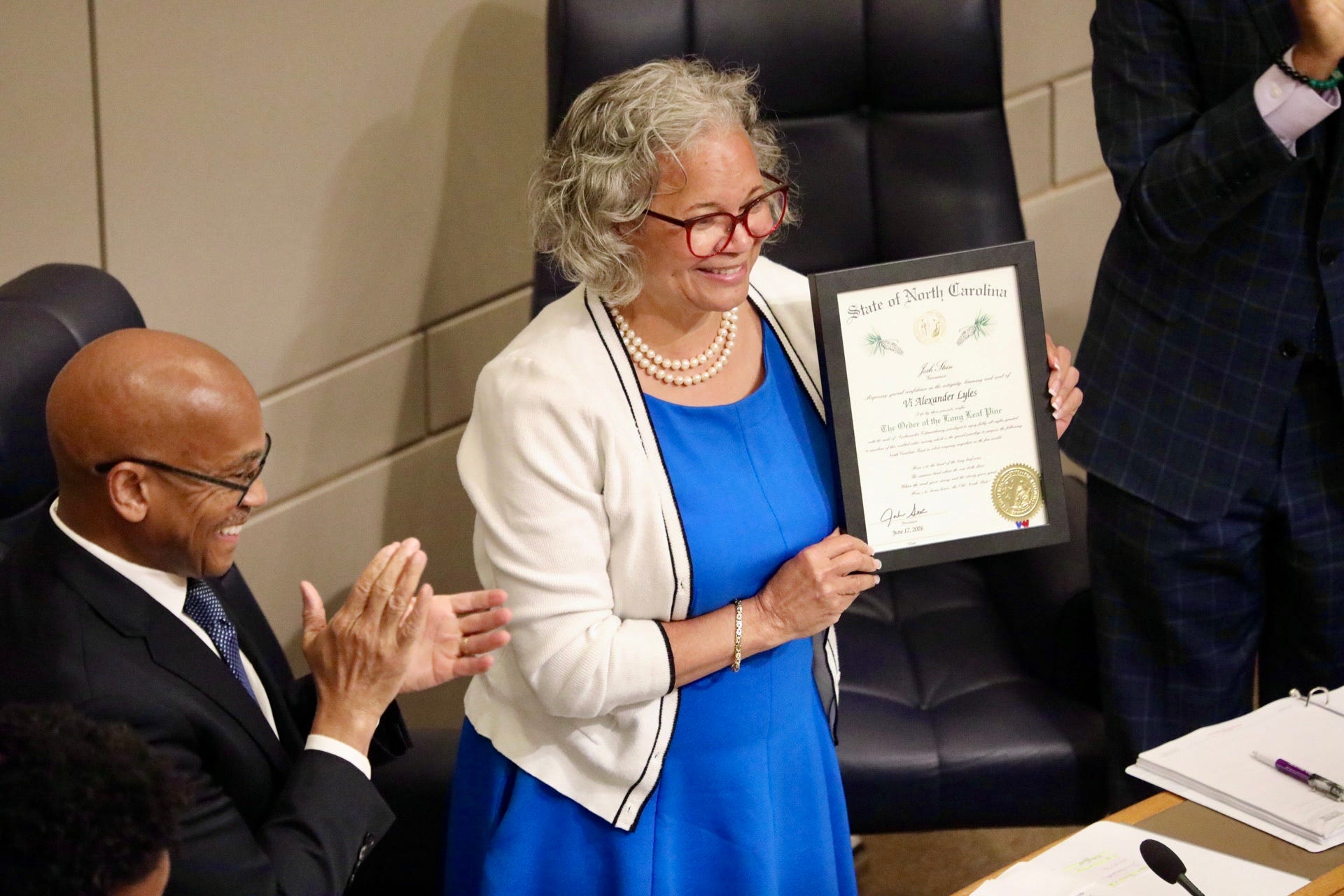
When Rob Harrington is sworn in as Mayor of Charlotte at 11:00 AM today, it will mark the end of an era in Charlotte city government. Mayor Vi Lyles, the city’s first Black female mayor and its second-longest serving, will leave office after more than eight years as mayor and over four decades serving the City of Charlotte.
Her leadership, spanning from December 2017 through June 30, 2026, navigated the city through a global pandemic, national reckonings on race and policing, economic booms, and intense local debates over growth, housing, and transit. Lyles leaves behind a record of pragmatic leadership focused on affordable housing, infrastructure, and steady governance in turbulent times.
“I Trust Vi”
Born Viola Alexander Lyles on September 28, 1952, she brought decades of public service experience to the mayor’s office. Her time in Charlotte started at Queens University, and continued as a member of city staff. Before her election, she served as a city administrator and spent two terms on the Charlotte City Council (2013–2017), including time as Mayor Pro Tempore.
Her deep institutional knowledge proved invaluable.
In 2017, she challenged incumbent Mayor Jennifer Roberts in the Democratic primary, winning by a comfortable margin. Her campaign emphasized trust and competence—“I Trust Vi”—positioning her as a steady alternative amid the turbulence of Roberts’ term, which included the HB2 “bathroom bill” fallout, the Keith Lamont Scott protests, and the 2016 presidential election.
Early Challenges and Soft Power
The mayor’s role in Charlotte is largely one of soft power. The city manager handles day-to-day operations, the council sets policy, and the mayor votes primarily to break ties or exercise a veto. Lyles leveraged relationships across business, faith communities, and government to advance priorities.
One early test came in 2020 with the decision to host the Republican National Convention. Support on council was razor-thin, and Lyles backed the event despite controversy. The eventual COVID-scaled version proceeded with limited fanfare.
Her administration prioritized affordable housing. Voters approved a significant increase in the housing bond—from an initial $15 million proposal to $50 million—in 2018, reflecting broad support for addressing upward mobility and opportunity gaps. Charlotte’s rapid growth had strained housing affordability, and Lyles worked collaboratively with the business community to push investments.

Navigating Crisis: Pandemic, Protests, and Recovery
Lyles’ leadership faced its sternest tests during the COVID-19 pandemic and the 2020 George Floyd protests. Like many mayors, she balanced public health measures with economic concerns. The city confronted fallout from a high-profile Charlotte-Mecklenburg Police Department (CMPD) kettling incident during protests, resulting in lawsuits against the department. Three police chiefs would serve under Lyles — Kerr Putney, Johnny Jennings, and Estella D. Patterson — with Patterson becoming the first woman to lead the department.
Post-pandemic, Lyles’ focus shifted to infrastructure and long-term planning.
Under her watch, the city adopted the Charlotte Future 2040 Comprehensive Plan and a new unified development ordinance aimed at increasing housing supply, passing by a narrow 6-5 vote despite opposition from some development-skeptical Democrats and Republicans.
A major milestone came in November 2025 when Mecklenburg County voters narrowly approved a one-cent sales tax increase (from 7.25% to 8.25%), projected to generate roughly $19.4 billion over 30 years for transportation and mobility improvements. The “Charlotte Moves” plan funded by the levy includes road and pedestrian upgrades (40%), bus modernization (20%), and other transit investments. Lyles strongly supported the referendum, campaigning on its potential to manage growth and enhance quality of life. The measure passed with about 52% support despite opposition in some suburban areas.
Implementation begins today, July 1, 2026—a fitting bookend to her tenure.
Charlotte also saw sports and economic successes during her years. The city welcomed Charlotte FC as an MLS expansion team. It hosted an NBA All-Star Game and was awarded the MLS All-Star game that will be played later this month, soccer events including Club World Cup matches, and benefited from corporate relocations and expansions (Honeywell, Lowe’s, Microsoft).
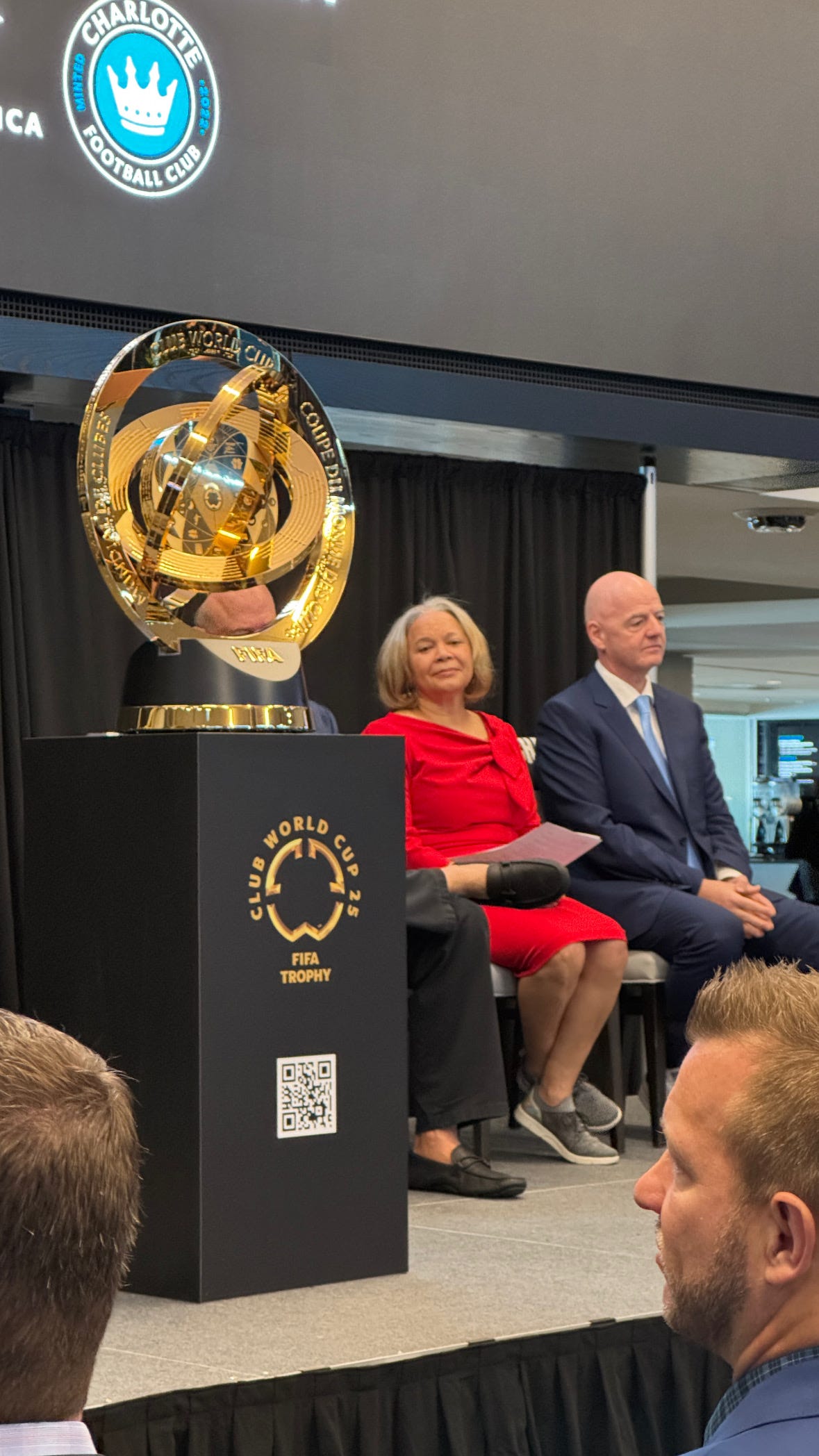
Lyles, a former city budget director, emphasized fiscal prudence and business-friendly policies while mending ties with state Republicans in Raleigh—helping navigate the partial repeal of House Bill 2 and restoring events like the NBA All-Star Game after its relocation due to HB2.
Style, Strengths, and Criticisms
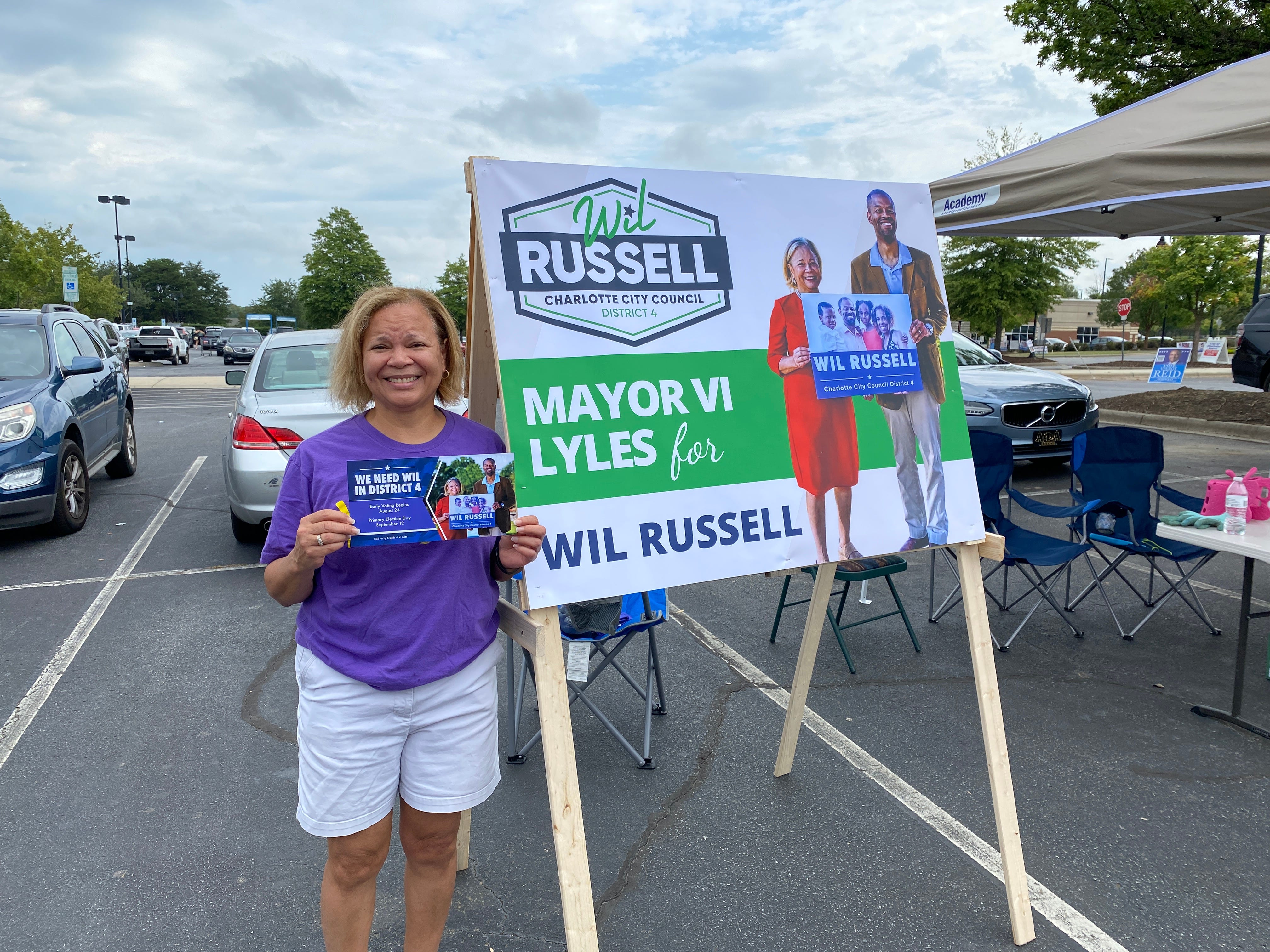
Lyles was known for bipartisanship and reticence on local electoral endorsements, though she actively campaigned for national Democrats like Biden and Harris. She maintained strong ties to the Black Political Caucus but broke with it in one notable 2023 endorsement, endorsing Wil Russell over the BPC’s pick, incumbent Reneé Perkins Johnson, who had voted against the Comprehensive Plan.
Supporters praised her consistency on social justice, LGBT issues and community representation. Critics sometimes wished for stronger public voices on social justice, yet her pragmatic approach won broad confidence—she was reelected multiple times, including a fifth term in 2025 with around 70% of the vote.
Her final year brought challenges that highlighted the increasing polarization of local politics. The tragic murder of Iryna Zarutska and subsequent public discourse exposed Lyles to intense scrutiny, disinformation, and partisan attacks. Though the mayor lacks direct control over courts, prosecutors, mental health services, or police policy, Lyles bore much of the political heat. Her measured response to the tragedy was politically costly in a more vitriolic environment, and came too late.
In May 2026, Lyles announced her early resignation effective June 30 to spend more time with family, citing personal reasons. Journalists covering Government Center took note of her increasing absences from zoning meetings — now run by another council veteran, Ed Driggs — and some maladroit moments in public. Her departure was not entirely unexpected to insiders but still marks a significant transition for a city that has grown dramatically under her watch.
Last month, City Council appointed Harrington as mayor to serve the remainder of the term through 2027. Harrington is expected to continue Lyles’ legacy of steadiness, consensus-building, and pro-business leadership.
A Lasting Impact
Vi Lyles’ legacy centers on tangible progress in housing and transit amid extraordinary circumstances. She steered Charlotte through crises with competence and worked across divides in a city often pulled between rapid growth and concerns over equity and infrastructure strain. As a former budget director with deep roots in Charlotte—spanning four decades—she understood the “nuts and bolts” of local government better than most.
In an era of national division, her emphasis on steady, non-partisan leadership stands out. Cities need leaders who can deliver results on housing supply, mobility, and economic opportunity without constant controversy. Lyles largely delivered that. Challenges remain—mobility, housing costs, public safety perceptions, and equitable growth—but the transit tax passage and housing initiatives provide tools for the next chapter.
As Charlotte enters a new phase with an interim mayor and eyes the 2027 election, Lyles’ record offers a blueprint of pragmatic progress. She proved that local government, at its best, is about trust, competence, and incremental wins that compound over time. “I Trust Vi” wasn’t just a slogan; for many residents, it reflected a mayor who showed up consistently through the best and worst of times.
Charlotte is a bigger, more connected, and in some measurable ways better-housed city because of her service. The “steady ship” has docked, and for the first time in Charlotte, a Black mayor will succeed a Black mayor.
Her departure coincides symbolically with the launch of the new transit funding era she championed. For a leader who prioritized long-term infrastructure over short-term headlines, it feels like an appropriate final note.