


An Exploration of “Sovereignty,” from the Political to the Personal
Early on in Mary Kathryn Nagle’s “Sovereignty,” the playwright uses a fight scene to establish many of the themes the audience will confront over the course of the two hour play: indigenous rights, tribal sovereignty, reservation life, the impact of violence, and family ties.
She uses an arrest and release after the fight — a drunk, white man in a red baseball cap punches a Cherokee cop, and gets away with it — to clue in the audience to the type of play they’re watching: a didactic, legal drama grounded in history and injustice.
These themes should come as no surprise given Nagle’s background. As both an attorney and as an enrolled citizen of the Cherokee Nation of Oklahoma, there are few people who have the expertise and lived experience to tell the story of “Sovereignty,” running at Three Bone Theatre through September 6 with special performances in Cherokee, N.C. on September 11th and 12th.
“Sovereignty” at Three Bone Theatre
Written By
Mary Kathryn Nagle
Directed By
Carolyn Dunn
Dates
August 21-September 6, 2026
Run Time
Approximately 2 hours with one 15-minute intermission
Venue
The Arts Factory at West End Studios
1545 W Trade St., Charlotte, NC
Content Warning
This production includes references to colonization, historical and contemporary trauma, systemic injustice, and strong language. There is a depiction of domestic and sexual violence. Recommended for ages 16+
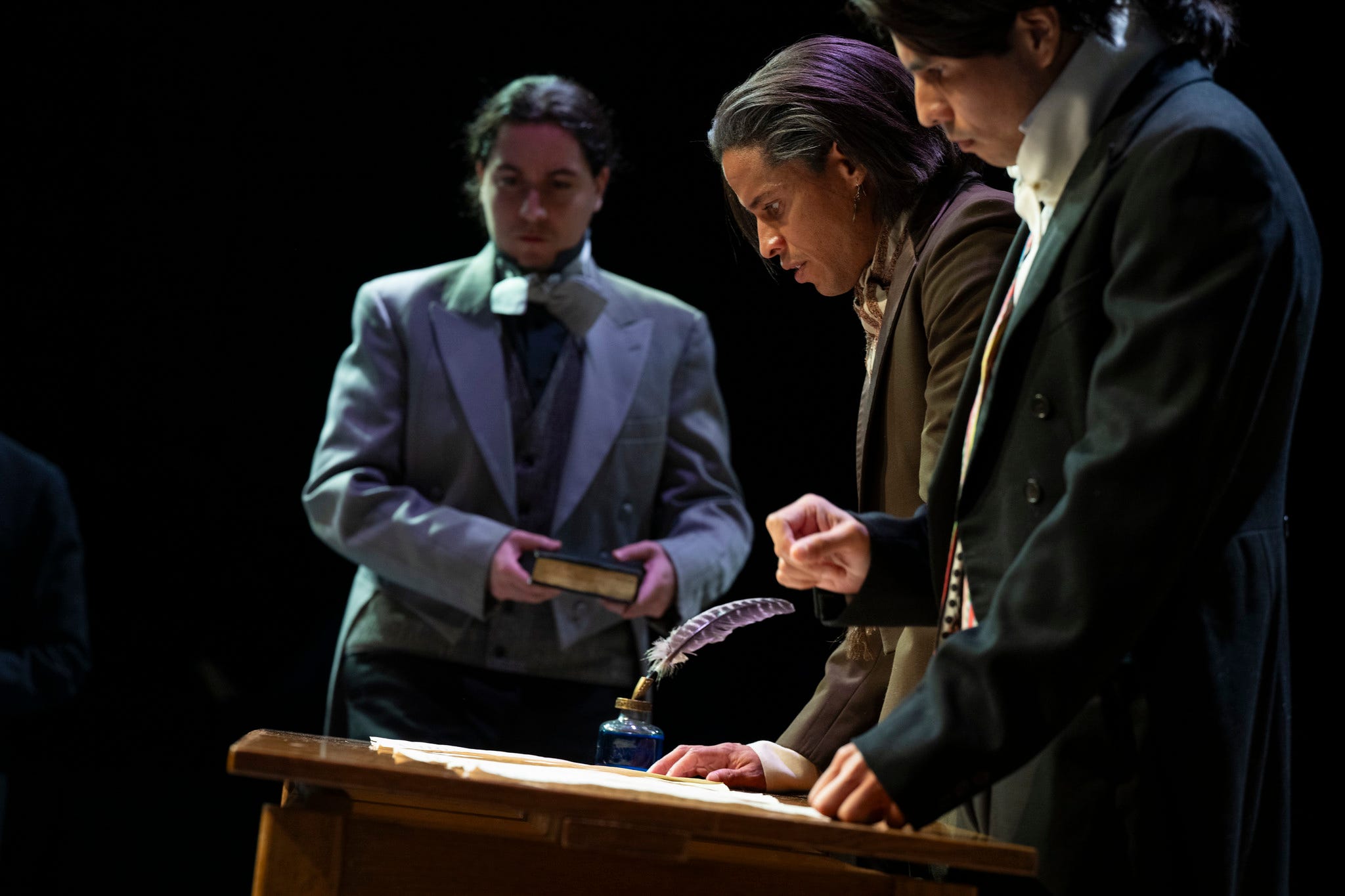
In Three Bone Theatre’s production, directed by Carolyn Dunn, the center stage is surrounded by graves, which are one of many elements connecting the two time periods woven throughout the play: the Cherokee Nation in 1835, and Oklahoma in the present day. The signatures of the historical characters hang above the stage as the same names rest on the gravestones below. They’re subtle touches from designers Jackie Hohenstein and Robin Vest.
The play starts in 1835 with John Ridge, portrayed by Lance Claymore. His performance anchors the past, while his descendent — the young lawyer Sarah Ridge Polson, played by Billie D. Merritt — anchors the present day.
Soon after, we’re introduced to most of the other characters of the era, including Keely Kidwell’s Sarah Bird Northrup, Josh Orsi’s Elias Boudinot, Marco Fuller’s Major Ridge, and Mvnte July’s John Ross. Like most of the 1835 characters they’re dramatizations of real members of the Cherokee Nation, and in the hands of Claymore, Kidwell, Orsi, Fuller, and July, they’re treated with reverence.
When we get to the present day, a fight — choreographed by Allison Collins — quickly breaks out at a tribal casino. Nathan Ahlgrim (Mitch), Kyle Riggs (Ben) and Ryan Dunn (Chorus) take the stage for the first time, and Orsi returns as Watie. In contrast with the 1835 time period, all of the present day characters are fictional.
Aside from Merritt and Claymore, the actors play dual roles with clear connections. Both of Ahlgrim’s characters are educated outsiders; Kidwell plays caretakers in both eras; July plays two members of the Ross family; Orsi portrays supporting characters who play witness to history. Dunn, as the chorus, plays everyone else.
Though the time shifts can be momentarily confusing given the dual roles, Fuller and Riggs excel at differentiating their characters, and Lorna Bowen’s costume design allows actors to change characters quickly.
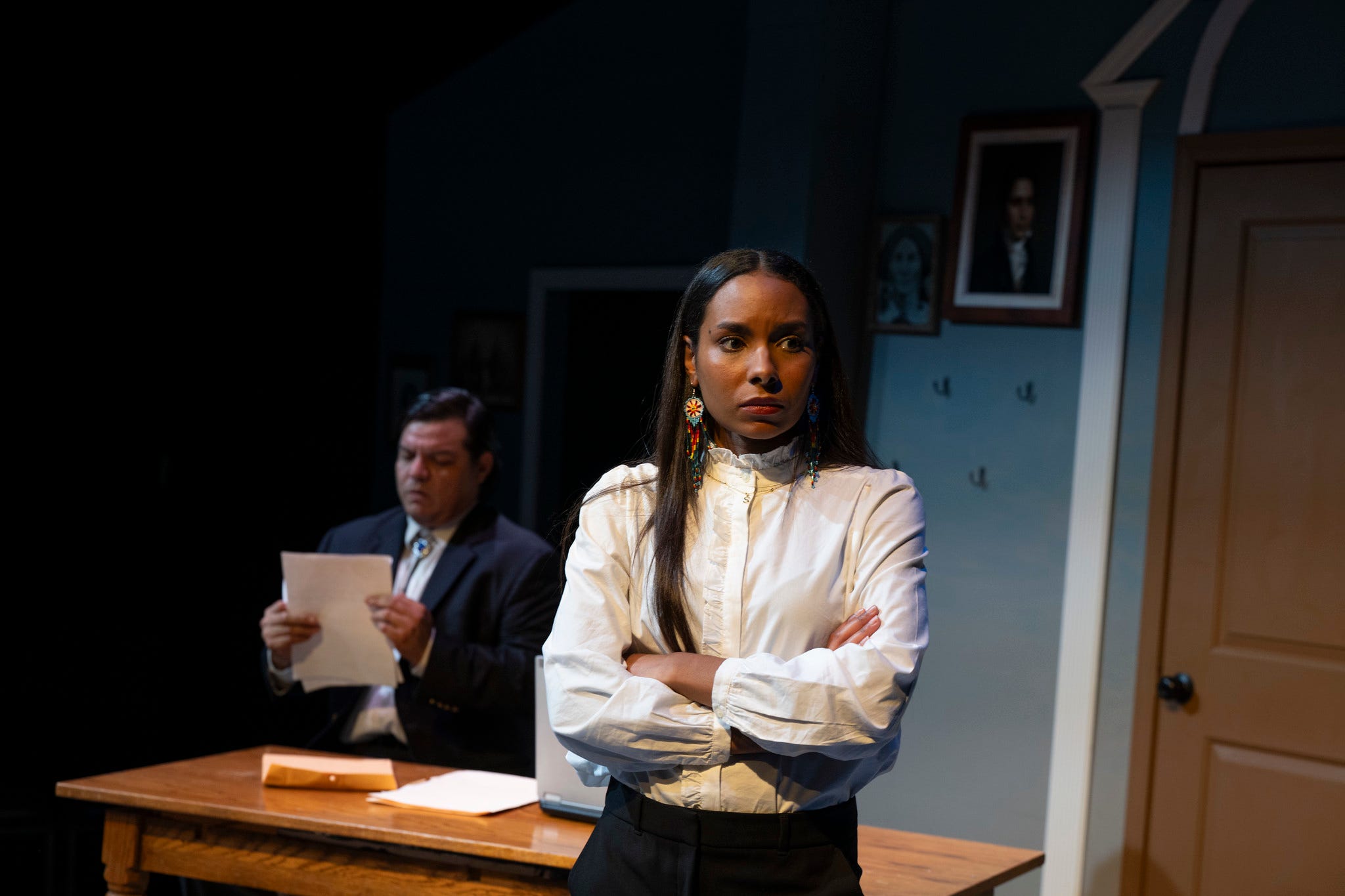
In the present day scenes, many of the actors — especially Merritt, July, and Ahlgrim — are tasked with explaining the intricacies of tribal sovereignty and federal law to the audience. Nagle’s script makes the topic matter accessible, but the explanations occasionally bring the drama to a halt.
It’s hard not to read Sarah Ridge Polson as an author avatar for Nagle, but Merritt’s performance makes the character her own. She delivers her lines confidently and gives a performance that keeps the dialogue from feeling pedantic. Merritt navigates Sarah’s journey in a grounded, believable way, and capably handles discussions and portrayals of violence against women.
At the preview performance Y’all Weekly attended, her climatic monologue in front of the Supreme Court had the audience erupting in cheers.
Fuller’s performance also merits praise. He exudes gravitas as the Cherokee leader Major Ridge, making all of the character’s actions feel deliberate. He has more lines in Cherokee than in English as the play goes on, but speaks with clarity in both languages.
In the present day, he filters that gravitas and authenticity through the dusty lens of Roger Ridge, allowing him to show off his comedic chops. Much of that comedy comes from adroit exchanges with Riggs’ naïve, problematic Ben.
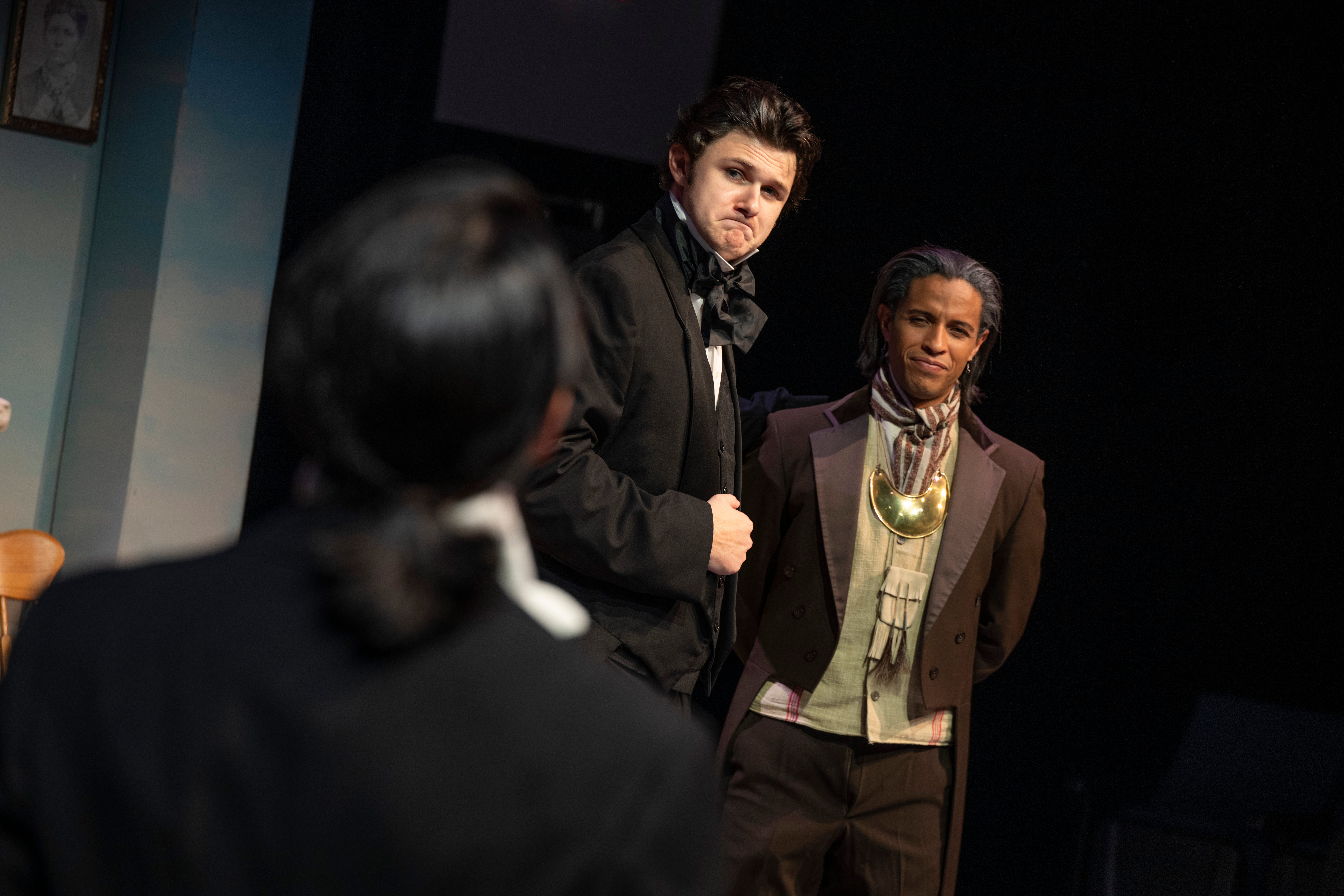
In addition to Ben, Riggs plays Andrew Jackson, who was born approximately 25 miles from the Three Bone stage. He portrays the President responsible for the Trail of Tears as a cartoonish supervillain, not unlike modern portrayals of southern segregationists on screen.
I understand the choice: does a historical figure who perpetuated a genocide really deserve to be portrayed with layers of nuance?
Either way, it is a stark contrast with his portrayal of the play’s other primary antagonist. Ben is insidious, and Riggs plays him with just the right amount of likability such that you don’t know if he will stay mostly harmless or break bad, even if all the signs are there.
What unites both of Riggs’ characters is that they weaponize violence to violate the sovereignty of the protagonists. Jackson violates the sovereignty of John Ridge and the Cherokee Nation on a macro, political level; Ben’s problematic behavior escalates to the point where he violates Sarah’s sovereignty over her own body.
This production is notable in that all of the actors are making their first appearance on the Three Bone stage, with many cast members bringing film and television credits with them. This run of “Sovereignty” features many indigenous actors and crew members, including David Jumper as the Cherokee language coach, and Dr. Yona Wade, a citizen of the Eastern Band of Cherokee Indians, as cultural consultant. A Louisiana Acadian Creole, Dr. Dunn is a non-enrolled Freedman tribal descendant (Cherokee, Mvskoke, Seminole) and is a Tunica/Choctaw-Biloxi and Atakapas-Ishak descendant and community member.
It’s clear a lot of care and intentionality went into this production, but we’d expect nothing less from Three Bone Theatre. As Dr. Dunn writes in the program, “Three Bone’s commitment to theatre and performance as a method of social justice, knowledge and change is needed more now than ever as we move into a world that seems less connected to its past, its present and its future as ideology rather than dialogue seems more and more prevalent.”
See It or Skip It?
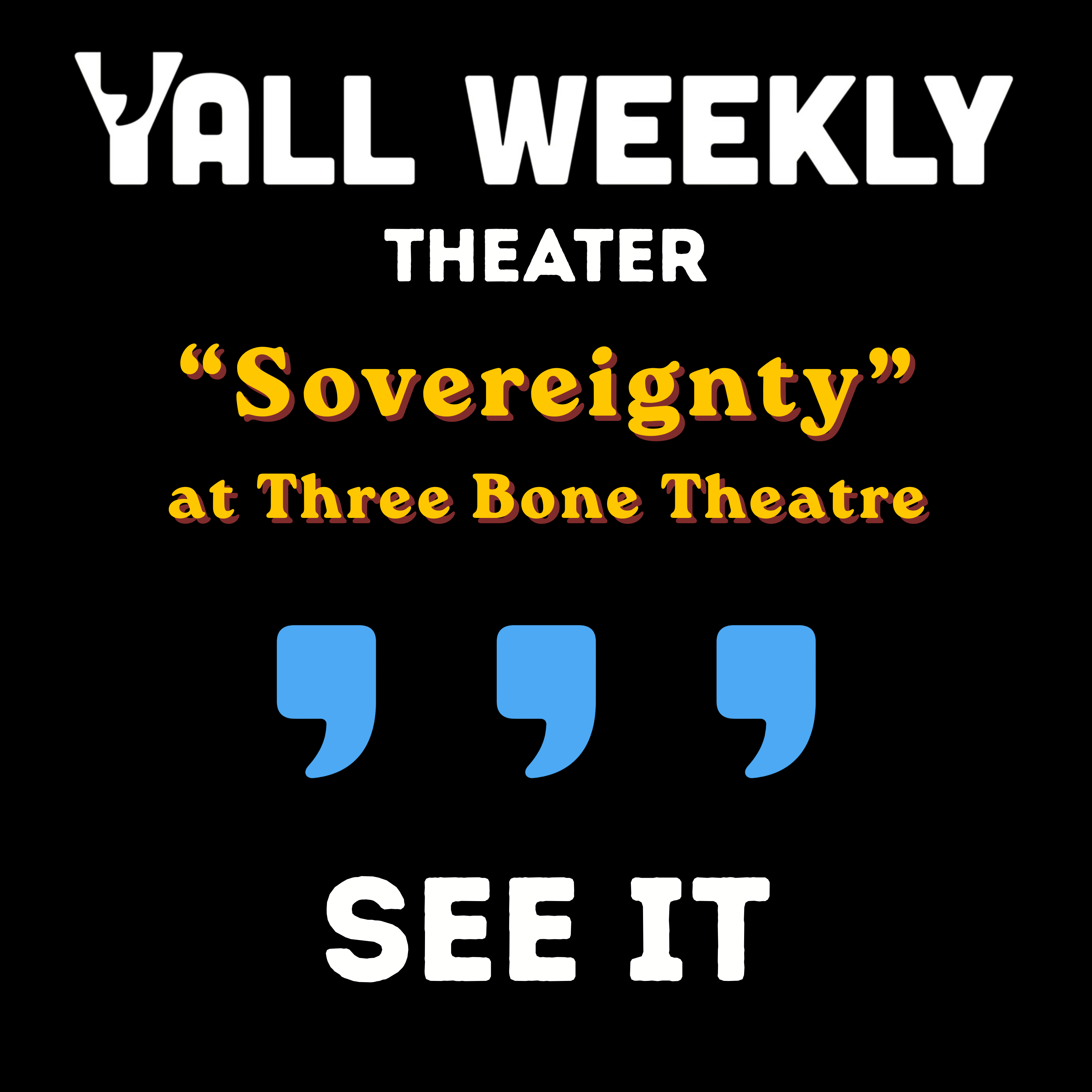
Our Verdict: See It
Part history lesson, part legal drama, Three Bone Theatre’s production of “Sovereignty” is worth your time, with memorable performances and Three Bone’s trademark cultural competency.
More From Y’all Weekly:
Three Bone Theatre Announces 15th Anniversary Season

It’s already been a big year for Three Bone Theatre.

